If you were forwarded this email (Hi! Welcome!), you can sign up to the newsletter here.

Good afternoon!
Reality TV has dominated our screens for over a decade, but if you thought this genre was out of new ideas, think again.
Netflix unveiled its 2026 Australian slate this week, with a raft of new and returning local productions, including a Wonka-inspired reality competition filmed on the Gold Coast.
The streaming giant describes Wonka: The Golden Ticket as a “high-stakes social experiment” filmed inside “a retro-futuristic dreamscape”. Contestants will navigate a series of mental and physical challenges, “designed to probe their instincts, resilience, and ability to thrive in chaos.”
No word on whether we should expect a glass elevator and a chocolate river, but the latter sounds like a work health and safety nightmare.


I’ve got 10 seconds
Quote of the week
“I am completely devastated for the 65 ticket holders who were turned down from entering our Paris show on Sunday night. This is completely unacceptable and wrong”.
British singer-songwriter Raye has offered her “deepest apologies” for a Ticketmaster glitch that saw fans turned away from her recent show. The performer promised the 65 ticketholders who were impacted “complimentary tickets to any Raye future show of their choice and a signed vinyl”. The ticketing agency blamed a system error and promised full refunds for impacted concert-goers.
Stat of the week
$US1.2 billion ($AU1.7b)
How much eBay will pay to acquire the second-hand clothing app Depop. Etsy is selling the platform five years after purchasing it for $1.6b.
Photo of the week
The 800th episode of The Simpsons aired this week, featuring a plethora of celebrity cameos, including the cast of The Pitt. Noah Wyle, who plays Dr Michael ‘Robby’ Robinavitch in the hit HBO Max series, agreed to partake in the milestone episode. He was joined by his costars Katherine LaNasa (Dana Evans) and Taylor Dearden (Dr Melissa ‘Mel’ King). Now in its 37th season, The Simpsons is America’s longest-running animated series, longest-running sitcom, and longest-running scripted primetime series in history.


I’ve got 30 seconds
The group chat TL;DR
An Australian production of Dracula starring Cynthia Erivo has debuted on London’s West End. The Wicked star plays 23 different characters and delivers 20,000 words of dialogue in the one-woman adaptation of Bram Stoker’s classic novel. Written and directed by Aussie Kip Williams, Dracula opened on Tuesday and is scheduled to run until the end of May. Williams has had previous success on the West End with his one-woman adaptation of The Picture of Dorian Gray (which starred Sarah Snook). After success in Sydney and London, the production wrapped up an acclaimed run on Broadway last year. Snook’s performance earned her a Tony Award.
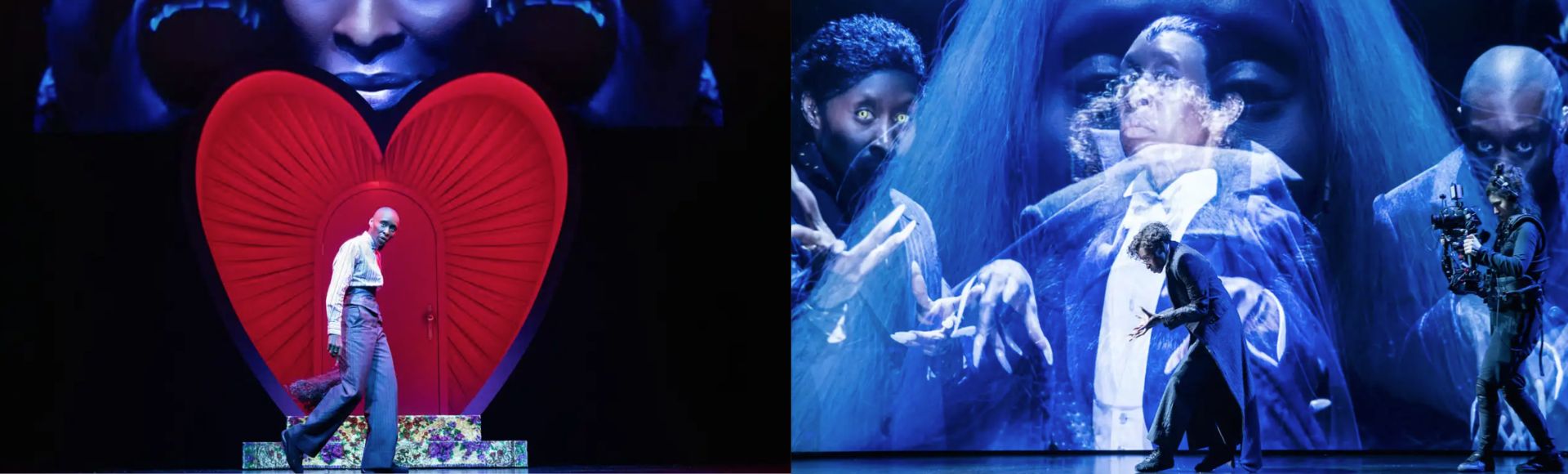
Images: Daniel Boud via Dracula West End
Taylor Swift has been named the biggest-selling global artist for a fourth consecutive year. The International Federation of the Phonographic Industry (IFPI) represents the recorded music industry worldwide. It announced Swift as the top-selling artist of 2025, the sixth time the singer has been named at the top of the IFPI Global Artist Chart. K-pop boy band Stray Kids achieved their highest-ever ranking at number two, followed by Drake in third. The Weeknd and Bad Bunny round out the top five.


Regional music festival Groovin’ the Moo has announced it will return in 2026, after back-to-back cancellations in 2024 and 2025. In a shakeup to its traditional format as a touring festival, GTM 2026 will take place as a one-off show in the northern NSW town of Lismore. Launched in 2005, GTM brought local and international live acts to regional towns including Maitland, Bendigo, and Bunbury. After a two-year hiatus, promoters have called the reimagined 2026 GTM a “deliberate and considered return”. Organisers said the lineup for the 9 May event “will be announced in the coming weeks.”

I’ve got 1 minute

Why is America’s Next Top Model back in the headlines?
The three-part docuseries Reality Check: Inside America’s Next Top Model was finally released on Netflix this week, alongside news that the franchise could soon be rebooted.
Created and hosted by model Tyra Banks, America's Next Top Model (ANTM) ran for 24 seasons (known on the show as “cycles”) and inspired a global franchise of spin-offs.
When it debuted in 2003, ANTM was framed as a competition where everyday women could break into the fashion industry for a shot at stardom.
Models competed in weekly challenges and photoshoots to avoid elimination. The last person standing would be crowned “America’s Next Top Model,” with the promise of a modelling contract to fast-track their fashion career.
Now, the series is facing a cultural reckoning. Here’s why.
Contestants
Contestants from the show’s 24 cycles opened up about their experiences on ANTM for the new Reality Check docuseries, including Shandi Sullivan (cycle 2). Sullivan was filmed having sex with a male driver in 2004, which the show framed as a cheating scandal to audiences.
ANTM executive producer Ken Mok called it “one of the most memorable moments” in the show’s history.
Sullivan (who was 21 at the time) has now explained she’d had two bottles of wine, and “was blacked out for a lot of it”. “I didn’t even feel sex happening; I just knew it was happening. And then I just passed out.”
Nearly two decades since the episode aired, commentators have noted that Sullivan was intoxicated and therefore unable to give consent.
“The opinion that sobriety is a necessary condition for consent was by no means marginal in the early 2000s,” Time TV critic Judy Berman wrote.
Reality Check is “careful, maybe for legal reasons, to avoid labelling [it] as sexual assault,” but Berman suggested the lack of accountability makes Sullivan’s story even darker.
“The failure to intervene with an allegedly blacked-out Sullivan, as well as the decision to continue filming her ordeal that night and in the days that followed, would’ve been an ugly one,” she wrote.
Judges
For most of the early cycles, Banks was joined on the judging panel by runway coach Miss J Alexander, photographer Nigel Barker and creative director Jay Manuel.
In the docuseries, Manuel said he was frustrated with the show’s direction and tried to quit, but was pressured into staying. From there, he said Banks refused to speak to him off-camera. Banks declined to comment on their relationship.
Alexander, another ANTM judge, suffered a stroke in 2022. The runway coach said Banks “never came” to the hospital to visit. “I taught models how to walk. Now I can’t walk… not yet.”
The trio were fired from the show in 2012 as it headed into its 19th cycle.
Tyra Banks
Despite rarely speaking publicly about ANTM backlash, executive producer and host Tyra Banks agreed to appear in the documentary.
One of the most iconic moments in reality TV history – Banks’ “We were all rooting for you” confrontation with contestant Tiffany Richardson – is revisited in Reality Check.
“I knew I went too far,” Banks admits, describing her anger as a culmination of pressure, emotion and cultural weight.
In a now-deleted Instagram post, Richardson responded by calling Banks a bully. “You know how you treated me the whole time off and on camera,” she wrote.
While Banks has accepted responsibility for some of the show’s controversies, she attributes much of the blame to the producers and viewers.
“You guys were demanding it. And so we kept pushing… more, and more, and more.”
Banks ends the docuseries with a cryptic message: “I feel like my work is not done. You have no idea what we have planned for Cycle 25.”
Reporting by Elliot Lawry.

Together with Bell Shakespeare

Power. Betrayal. A very bad day for Julius Caesar.
Bell Shakespeare's new production of Julius Caesar, directed by Peter Evans, is serving up all the backstabbing drama you love in your favourite political thrillers – just with togas and iambic pentameter.
Rome’s republic is hanging by a thread. Caesar keeps “refusing” the crown, Brutus and Cassius panic, and one brutal decision changes everything.
Shakespeare’s OG political thriller, played out right in front of you. Showing in Sydney, Canberra and Melbourne.

I’ve got 2 minutes

Choreographed consent: What’s it like to work as an intimacy coordinator?
There’s been a huge shift in the way sex and sexual identity are represented on screen over the past decade.
In the wake of Hollywood’s ‘Me Too’ reckoning, intimacy coordinators have become an increasing presence on film and television sets.
But what does an intimacy coordinator actually do?
Today, we’re exploring the world of one of Hollywood’s most in-demand jobs.
Context
Alex Trkulja is a certified Sex and Relationship Therapist who works as an intimacy coordinator. She describes the role as “choreographing consent around intimate scenes in TV and film,” ensuring “performers, cast, and crew all feel safe” during the process.
The work begins well before the cameras roll, and can include conversations with performers about their boundaries and meetings with filmmakers.
For Trkulja, this can mean team discussions to determine “what we’re trying to portray with [a] scene…how it complements storytelling around sex, intimacy, a character's journey or growth”.
Intimacy coordination can look different, depending on the production. On some shoots, intimacy coordinators are given full creative direction. Other times, Trkulja acts as a supportive presence in the background of a shoot.
“So when you are on set on the day, things can kind of just move really smoothly, and everybody feels safe and comfortable.”
Consent and communication are at the heart of the job, to create a safe space for actors to “move creatively through their work.”
The evolution of sex on screen
Recent portrayals of sex and sexuality on screen have shifted to a more authentic ‘warts-and-all’ representation of intimacy.
Successes like Normal People, Sex Education, Bridgerton, and Heated Rivalry portray sexuality through a new lens — one that reflects changing cultural conversations around visibility and representation.
Intimacy coordinator and sex therapist Aleks Trkulja explains how the media we consume can influence our ideas about intimacy: “So many people come into private practice learning about sex as this passionate thing through the TV shows or the movies that they've seen.”
As an intimacy coordinator, she said it’s “fascinating to be on the other end of that spectrum, to be informing the kinds of narratives around sex and intimacy that ultimately do impress upon people.”
For people who struggle to articulate their wants and needs, these movies and shows can create new dialogues. Trkulja said some of her clients will point to something they’ve seen on screen as an example of what they’re looking for, or “how they want to feel with someone”.
The female gaze
Traditional representations of sex and intimacy on screen have been criticised for portraying men’s experience of desire, without considering women’s.
“Most women will experience desire as more responsive [than spontaneous]. It takes time,” Trkulja said.
Bridgerton and Heated Rivalry are two recent examples that have been celebrated for portraying this yearning and build-up.
“These shows are really landing for a lot of people who resonate with elements of that experience of romance.”
More representation of female writers and directors in Hollywood is also helping to shape the storytelling of female desire and sex on screen, Trkulja noted.
“Even looking at Wuthering Heights, there’s this portrayal of women and sex on screen that is… more realistic of how women are experiencing their own sexuality and desire”.
Consent
One of the biggest transformations to modern sex scenes has been the increased representation of consent.
This theme has become a fundamental aspect of storytelling, “to portray the reality that consent isn't something that ruins the mood,“ Trkulja explained.
When consent is openly represented as “a normal part of sex and relationships,” it empowers our society, “especially younger people.”
While consent and representation have become key considerations on set, intimacy coordination is not ingrained in the processes... yet
What next?
The scope of the job involves supporting the storytelling and the performer, “but there are also liability issues.”
As an intimacy coordinator, Trkulja says she acts as a go-between for production, performers and cast.
“It’s still not a compulsory position on set,” but Trkulja predicts that will change.
There are mandatory safety processes when it comes to stunts and weapons on set, so why shouldn’t intimacy coordination follow suit?
Reporting by Emma Gillespie.
If you want to hear more from Aleks Trkulja, you can catch her at the Sydney Opera House for All About Women on 8 March. Details here.

Recommendation of the week

The entire TDA office wants you to play this colour memory game.
How well can you recall colours? The TDA team has become obsessed with this colour challenge. It’s hard to explain, but when copyeditor Lucy Tassell says, “everybody play this,” the next steps are clear.

TDA asks

